StatsTest Blog
Experimental design, data analysis, and statistical tooling for modern teams. No hype, just the math.
Intraclass Correlation: Measuring Agreement on Continuous Ratings
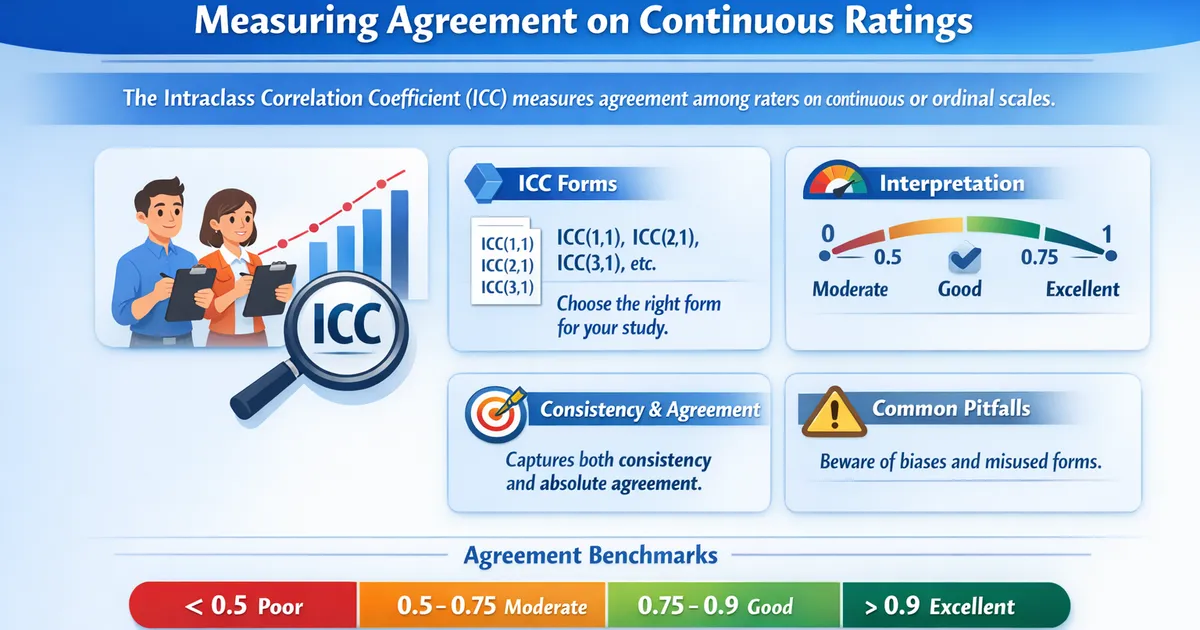
Intraclass Correlation Coefficient (ICC) measures agreement among raters on continuous or ordinal scales. Learn which ICC form to use, how to interpret values, and common pitfalls.
Kaplan-Meier Estimator
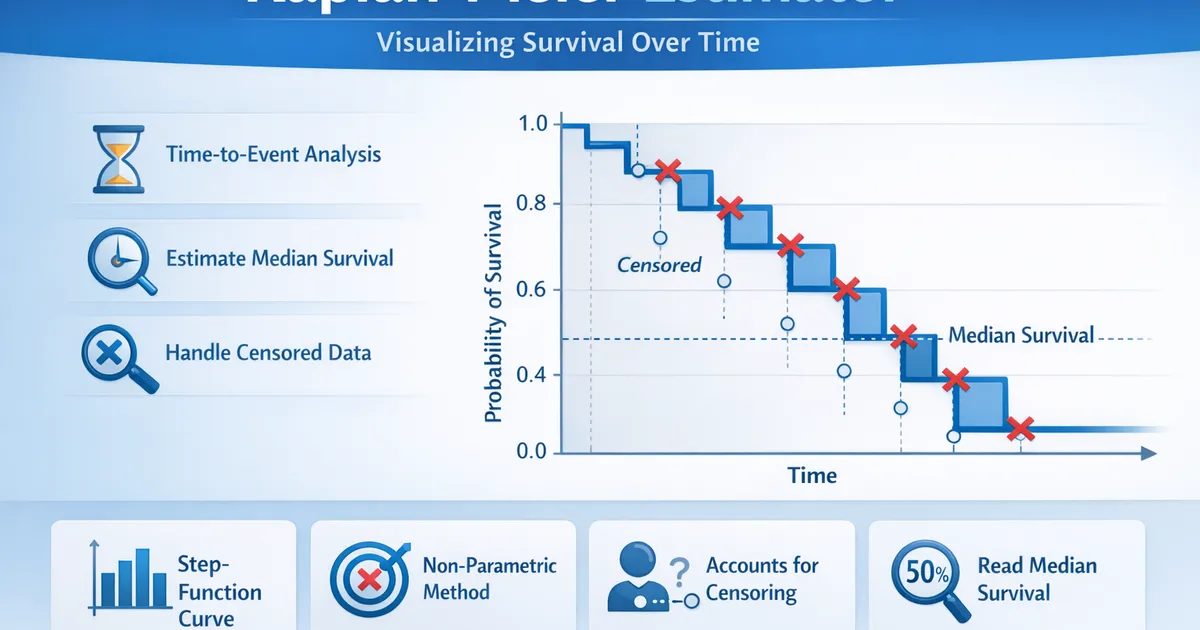
The Kaplan-Meier Estimator constructs a survival curve showing the probability of not experiencing an event over time. Use it to visualize retention, estimate median survival, and handle censored data.
Kolmogorov-Smirnov Test: Comparing Distributions and Detecting Drift
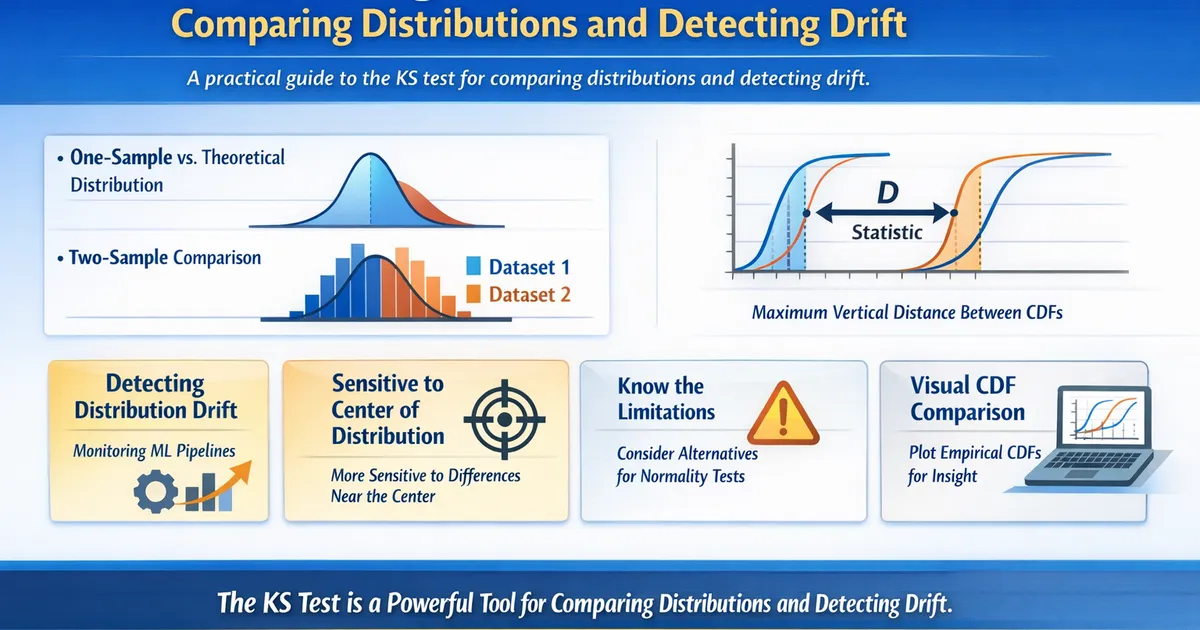
A practical guide to the KS test for comparing distributions and detecting drift. Learn the one-sample and two-sample variants, common pitfalls, and when to use alternatives.
Kolmogorov-Smirnov Test
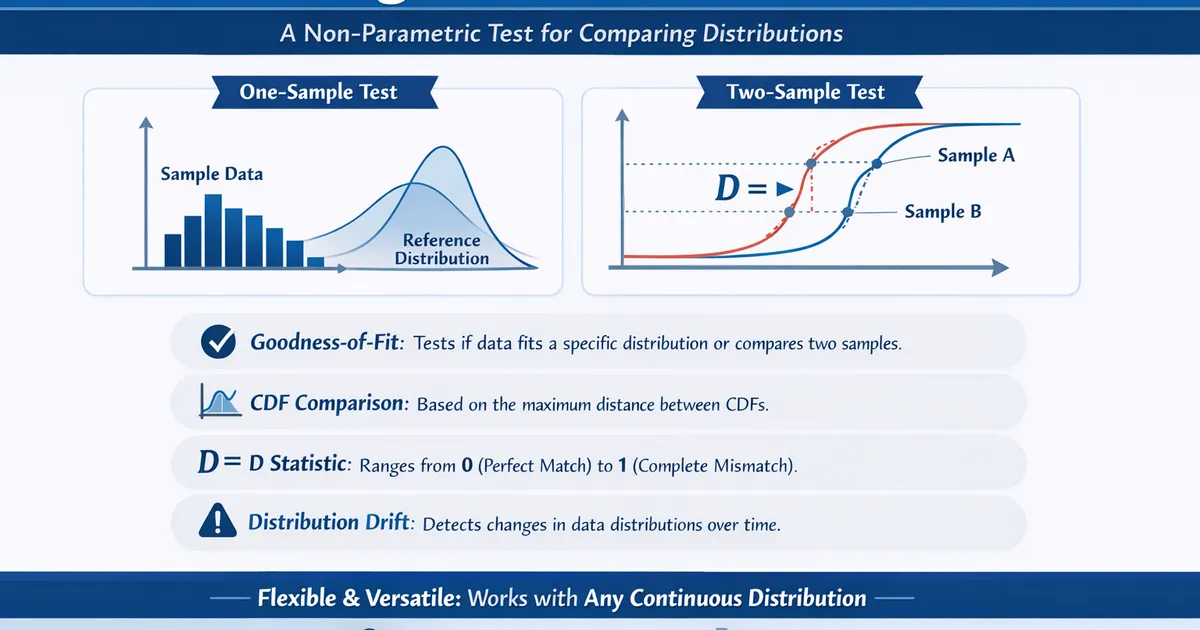
The Kolmogorov-Smirnov Test compares a sample to a reference distribution or compares two samples to each other. Use it to test goodness-of-fit to any continuous distribution or to detect distribution drift.
Krippendorff's Alpha
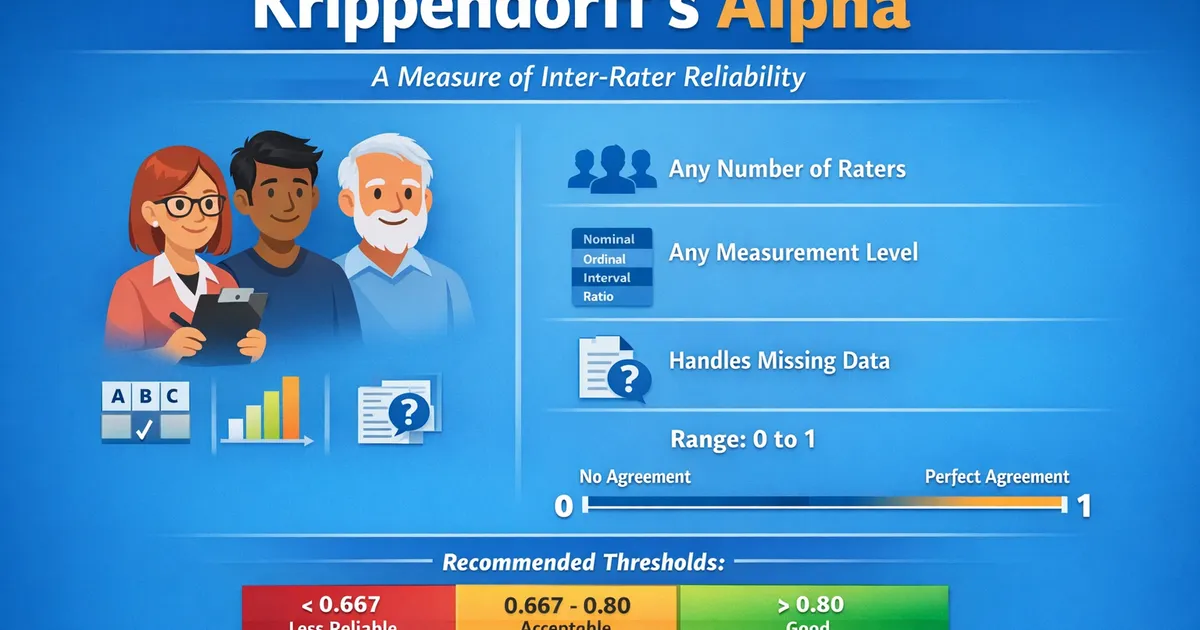
Krippendorff's Alpha measures inter-rater reliability for any number of raters, any number of categories, and any measurement level. Use it as a general-purpose agreement statistic.
Levene's Test
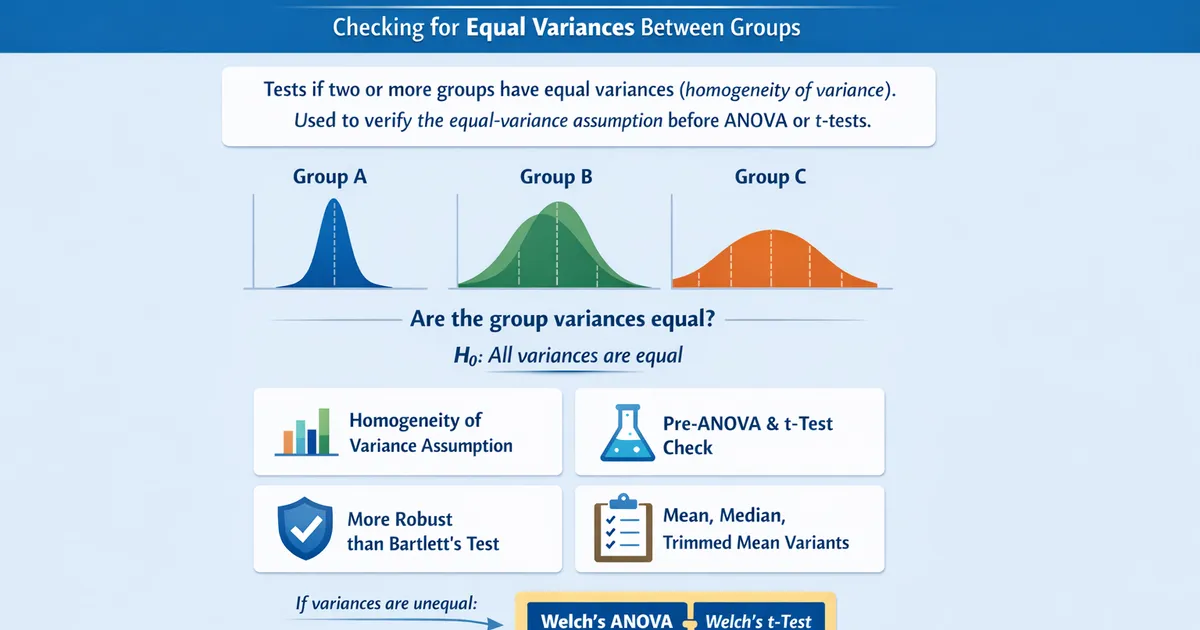
Levene's Test checks whether two or more groups have equal variances (homogeneity of variance). Use it to verify the equal-variance assumption before running ANOVA or t-tests.
Log-Rank Test
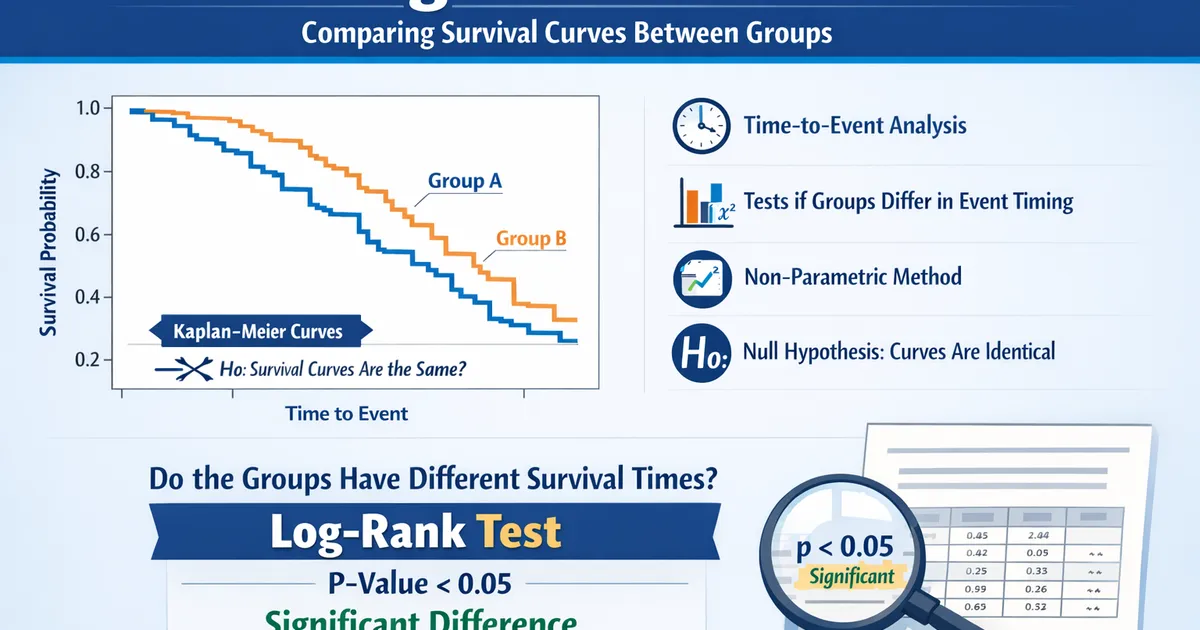
The Log-Rank Test compares survival curves between two or more groups. Use it when you want to know whether groups differ in their time to an event such as churn, conversion, or failure.
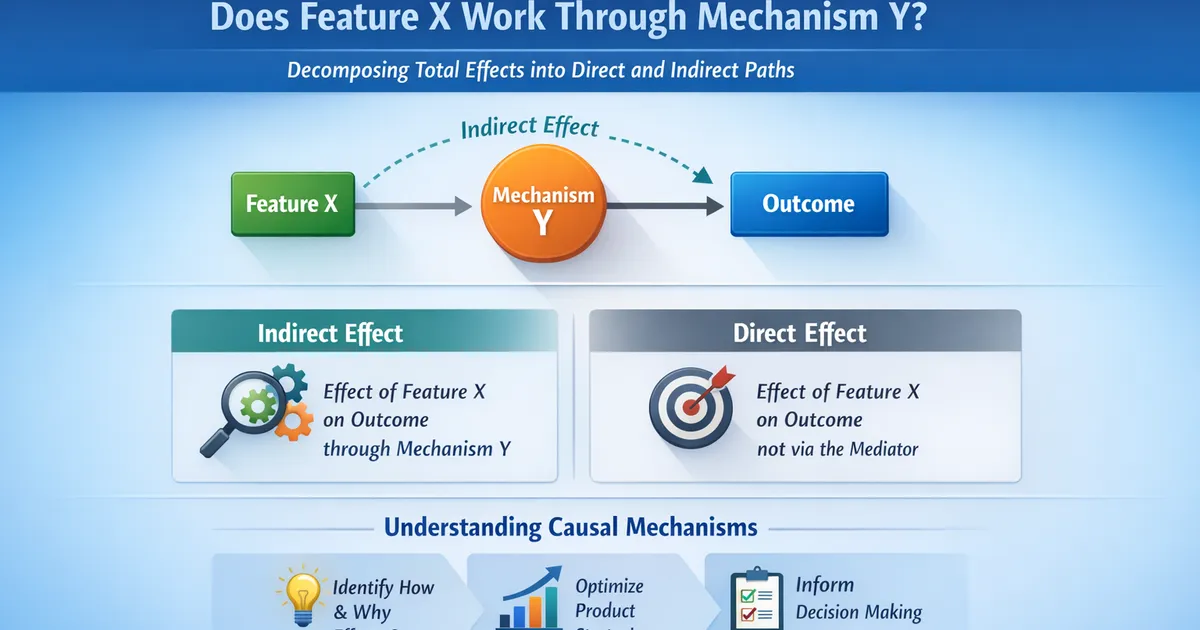
Mediation Analysis: Does Feature X Work Through Mechanism Y?
How mediation analysis identifies the causal mechanisms behind product effects. Learn when and how to decompose total effects into direct and indirect paths.
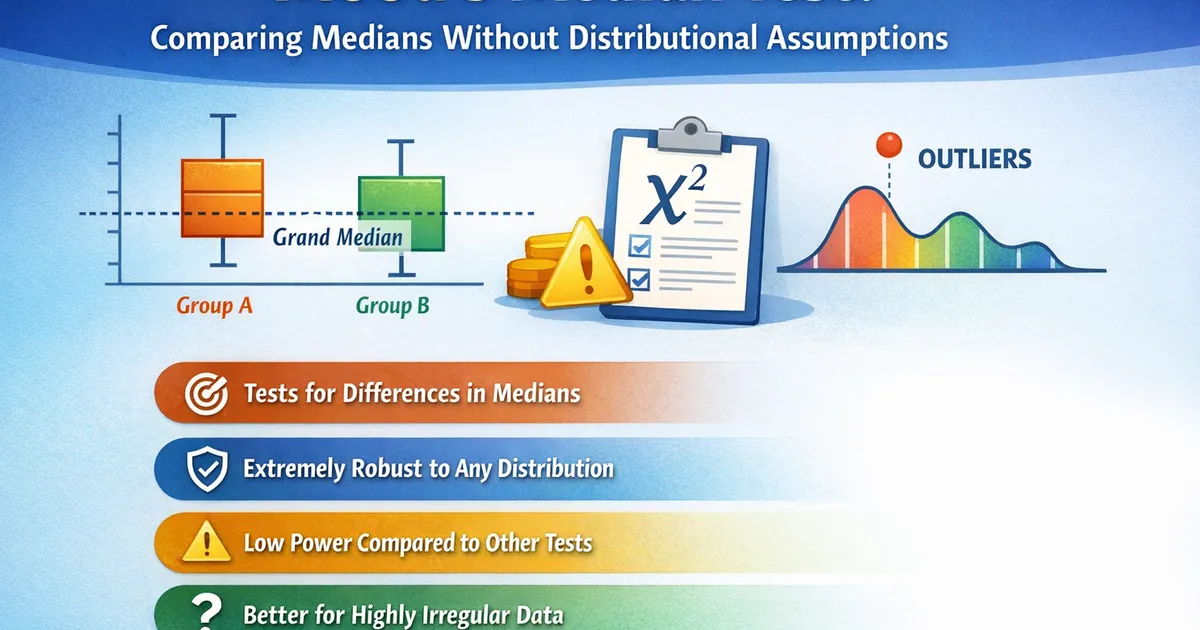
Mood's Median Test: Comparing Medians Without Distributional Assumptions
Mood's median test compares medians across two or more groups with minimal assumptions. Learn when it beats Mann-Whitney, its limitations, and better alternatives.
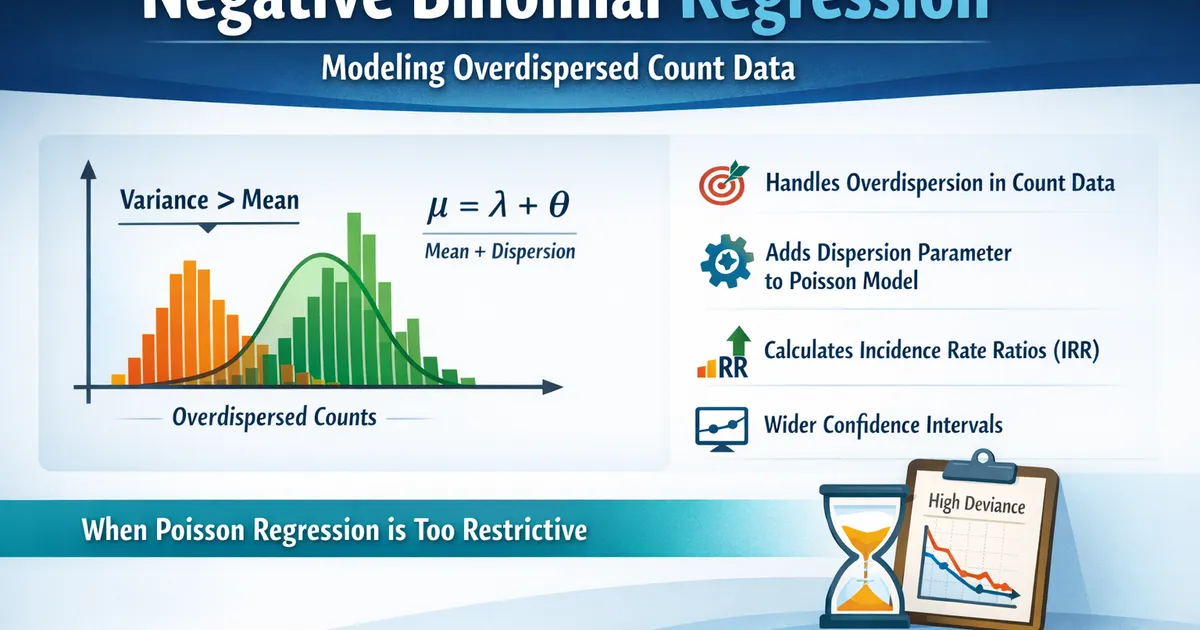
Negative Binomial Regression
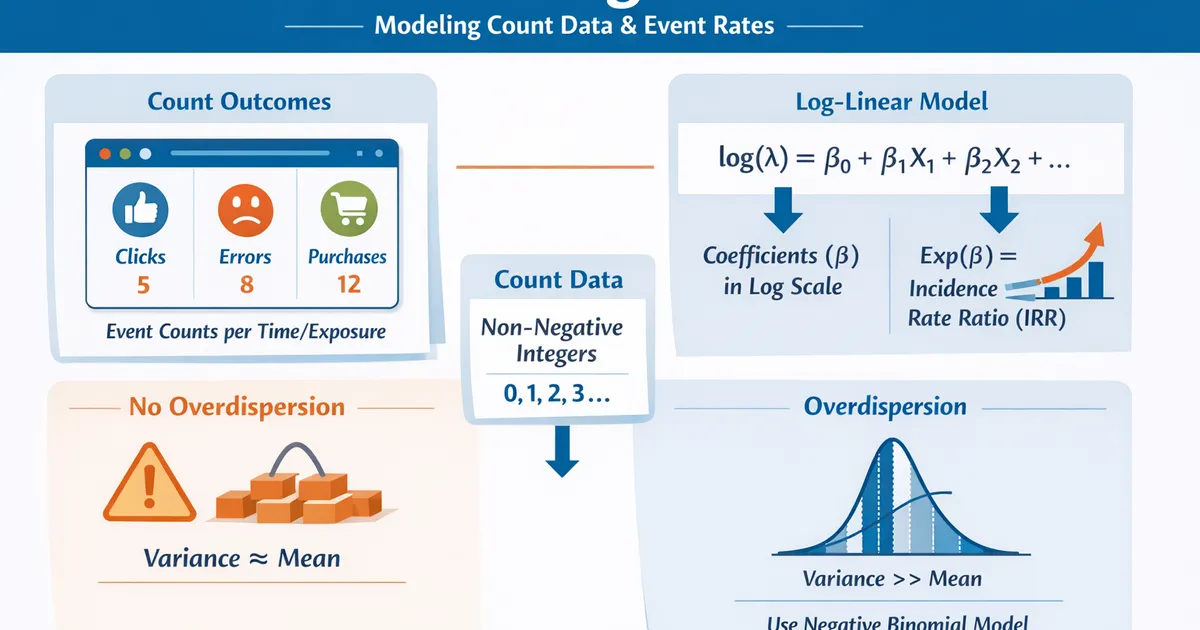
Negative Binomial Regression models overdispersed count data where the variance exceeds the mean. Use it when Poisson regression is too restrictive for your event counts.
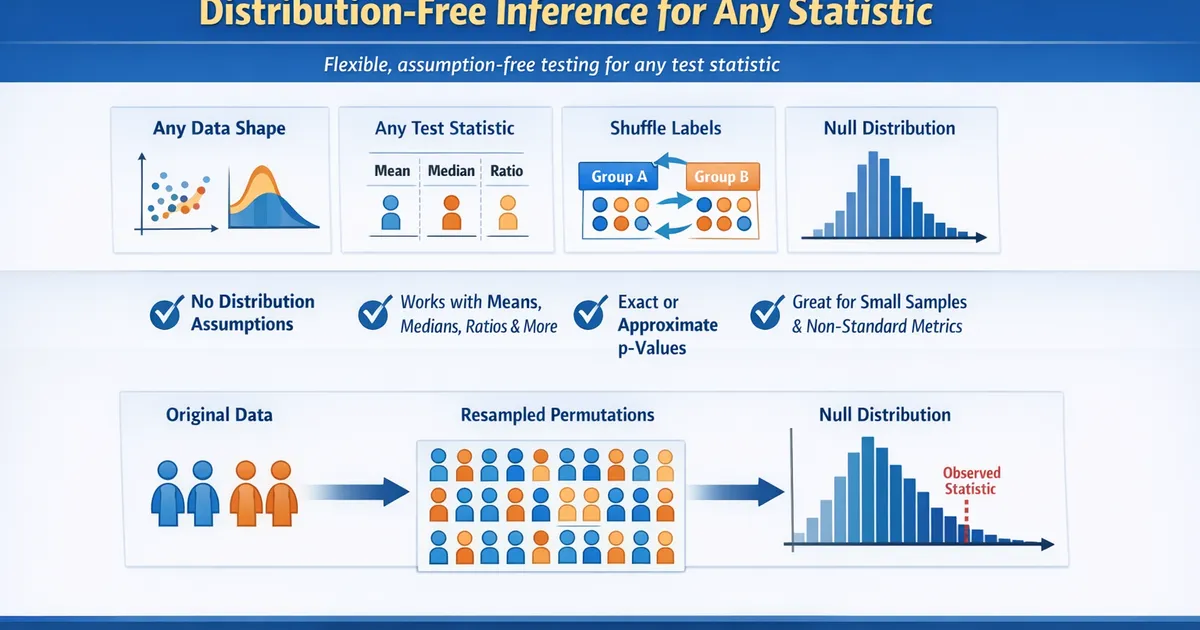
Permutation Tests: Distribution-Free Inference for Any Statistic
Permutation tests make no distributional assumptions and work with any test statistic. Learn when they beat parametric tests, how they work, and practical implementation tips.