StatsTest Blog
Experimental design, data analysis, and statistical tooling for modern teams. No hype, just the math.
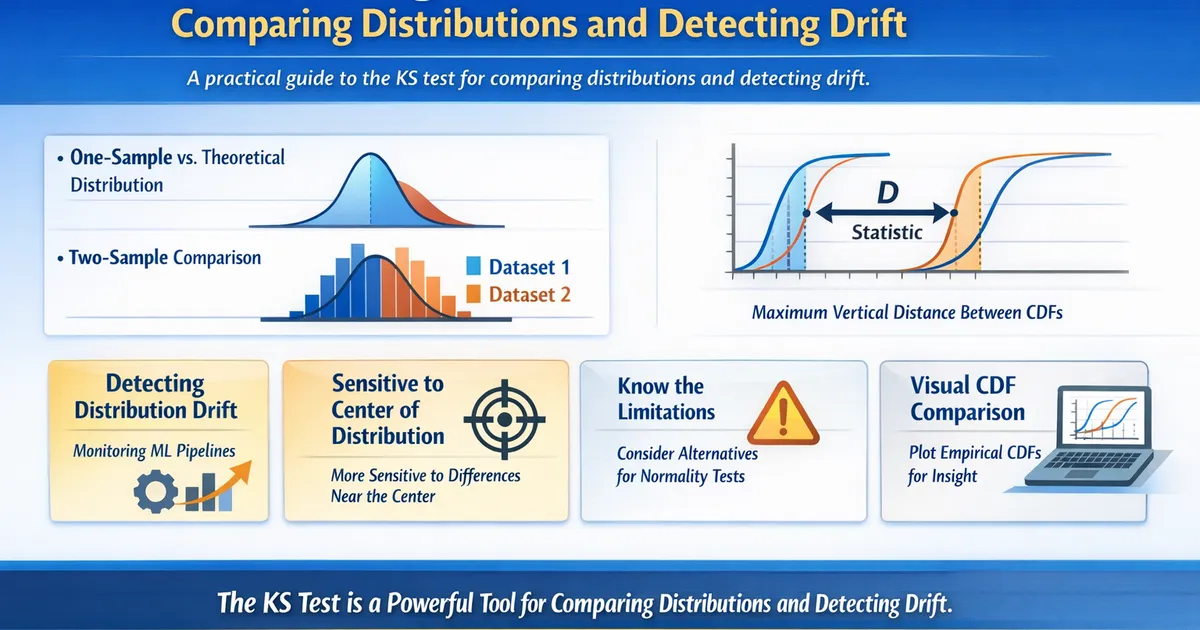
Kolmogorov-Smirnov Test: Comparing Distributions and Detecting Drift
A practical guide to the KS test for comparing distributions and detecting drift. Learn the one-sample and two-sample variants, common pitfalls, and when to use alternatives.
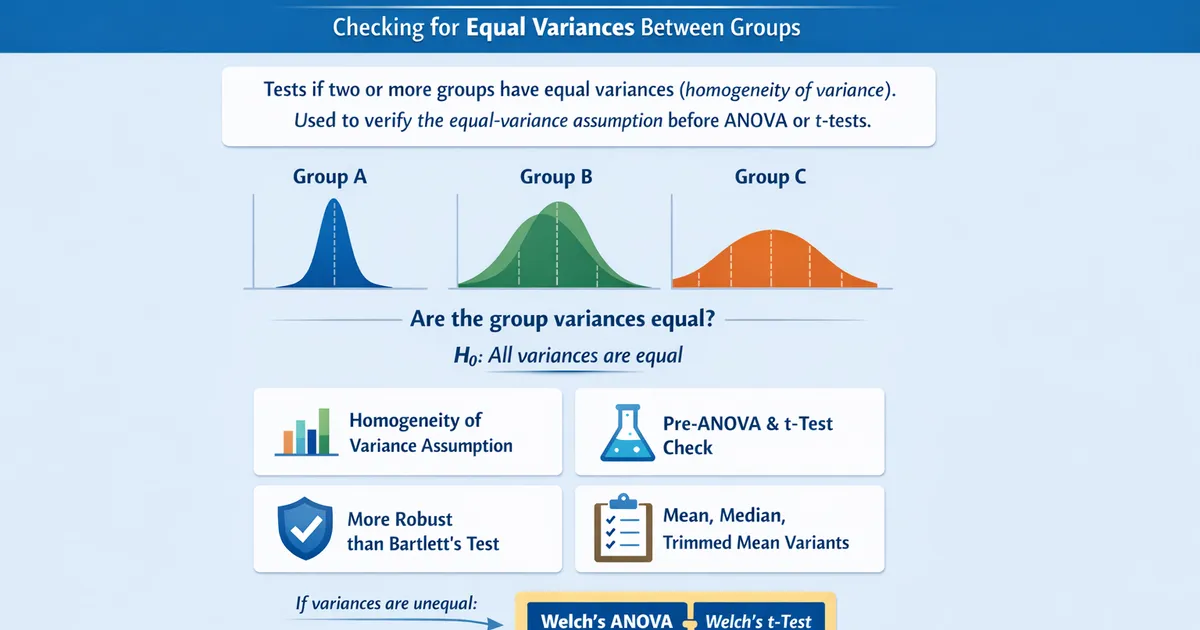
Levene's Test
Levene's Test checks whether two or more groups have equal variances (homogeneity of variance). Use it to verify the equal-variance assumption before running ANOVA or t-tests.
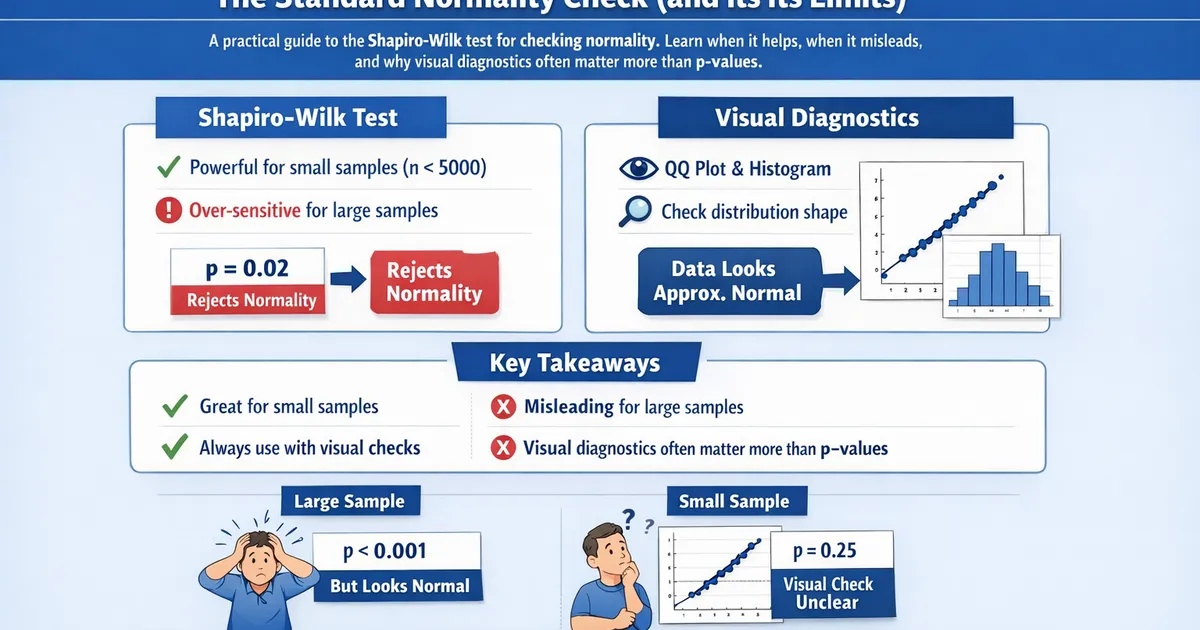
Shapiro-Wilk Test: The Standard Normality Check (and Its Limits)
A practical guide to the Shapiro-Wilk test for checking normality. Learn when it helps, when it misleads, and why visual diagnostics often matter more than p-values.
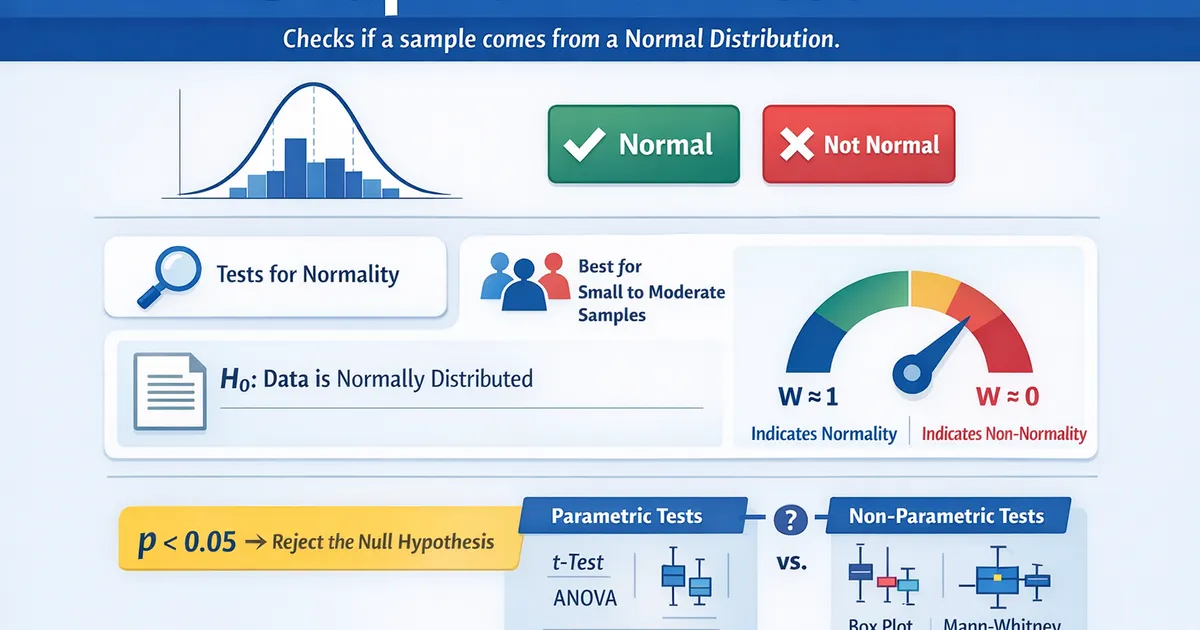
Shapiro-Wilk Test
The Shapiro-Wilk Test evaluates whether a sample comes from a normally distributed population. Use it to check the normality assumption before running parametric tests like t-tests or ANOVA.
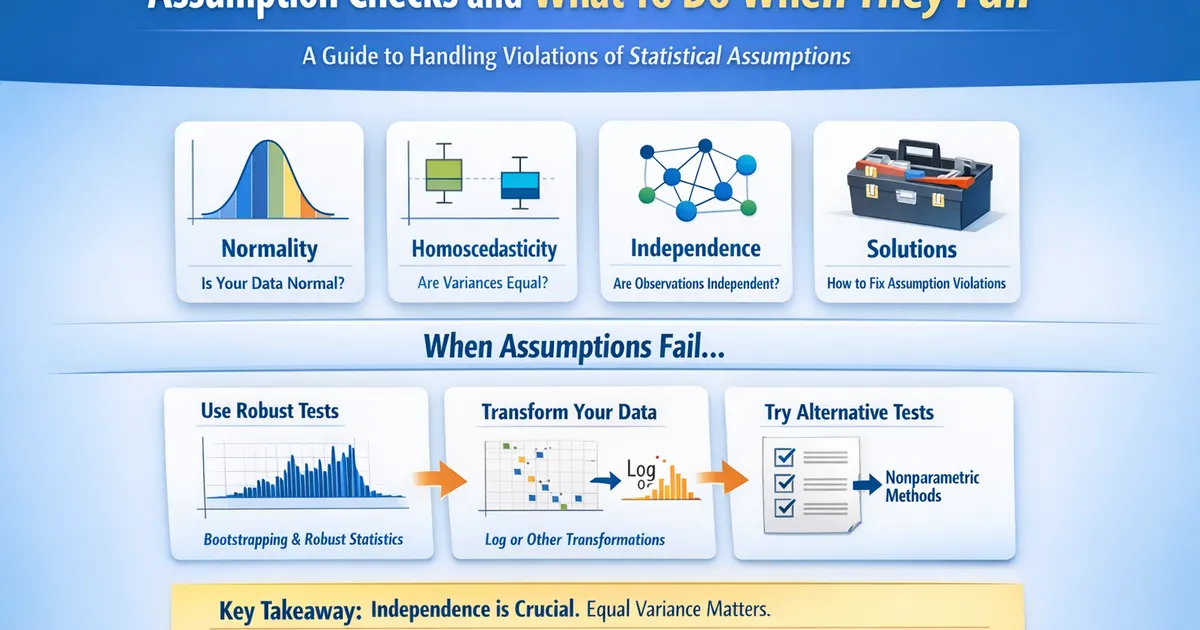
Assumption Checks and What To Do When They Fail
A comprehensive guide to statistical assumptions in hypothesis testing. Learn which assumptions matter most, how to diagnose violations, and what to do when your data doesn't fit the textbook requirements.
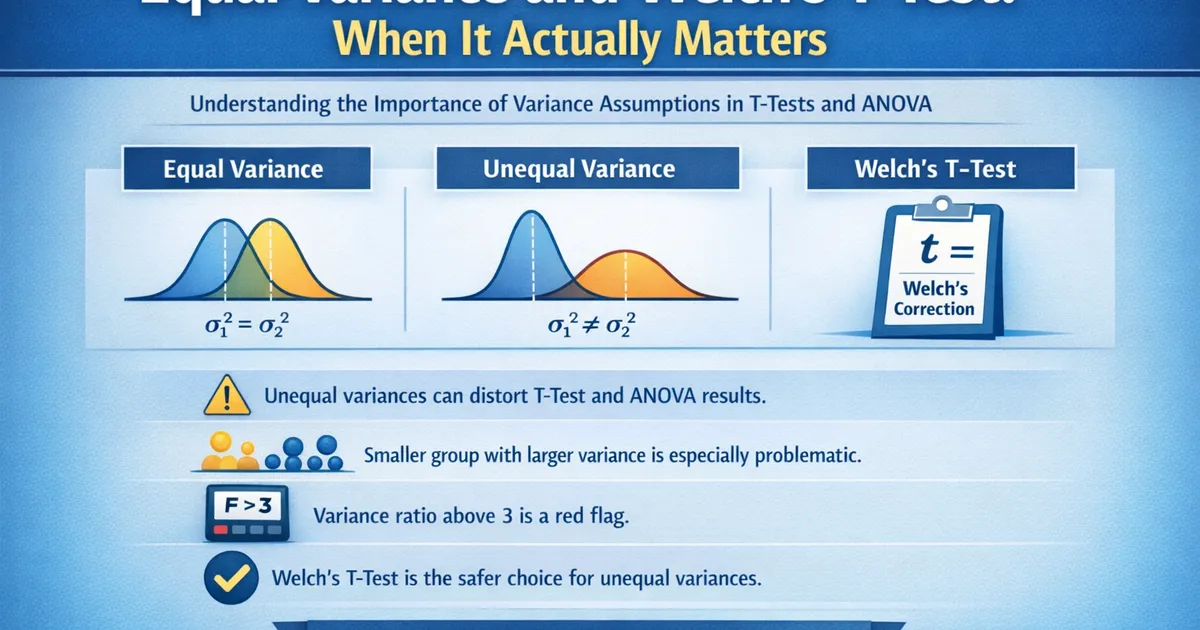
Equal Variance and Welch's T-Test: When It Actually Matters
A deep dive into the equal variance assumption for t-tests and ANOVA. Learn when violations are problematic, how to detect them, and why Welch's correction should be your default.
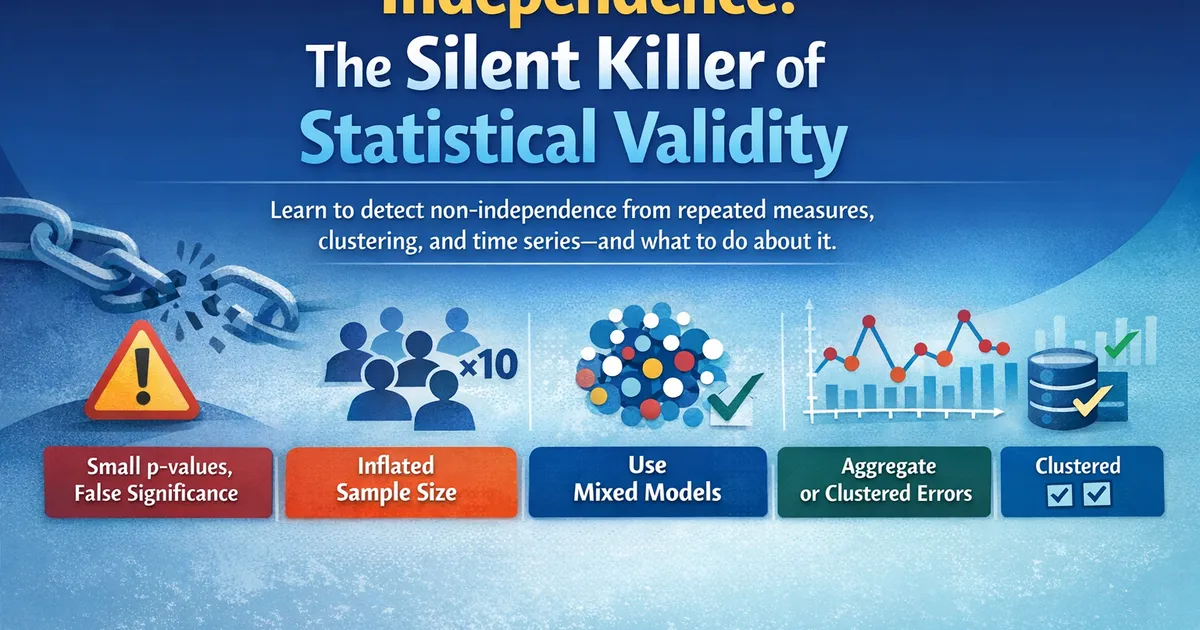
Independence: The Silent Killer of Statistical Validity
The independence assumption is the most critical and most commonly violated. Learn to detect non-independence from repeated measures, clustering, and time series—and what to do about it.
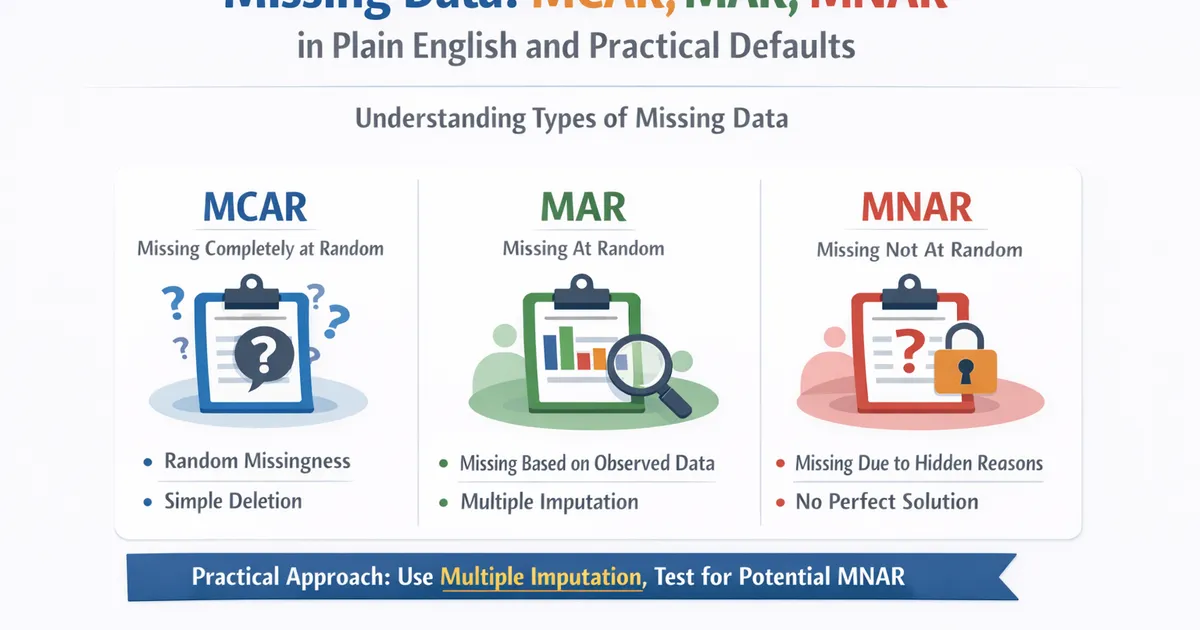
Missing Data: MCAR, MAR, MNAR in Plain English and Practical Defaults
A practical guide to handling missing data. Learn the three types of missingness, why it matters for your analysis, and sensible default approaches for product analytics.
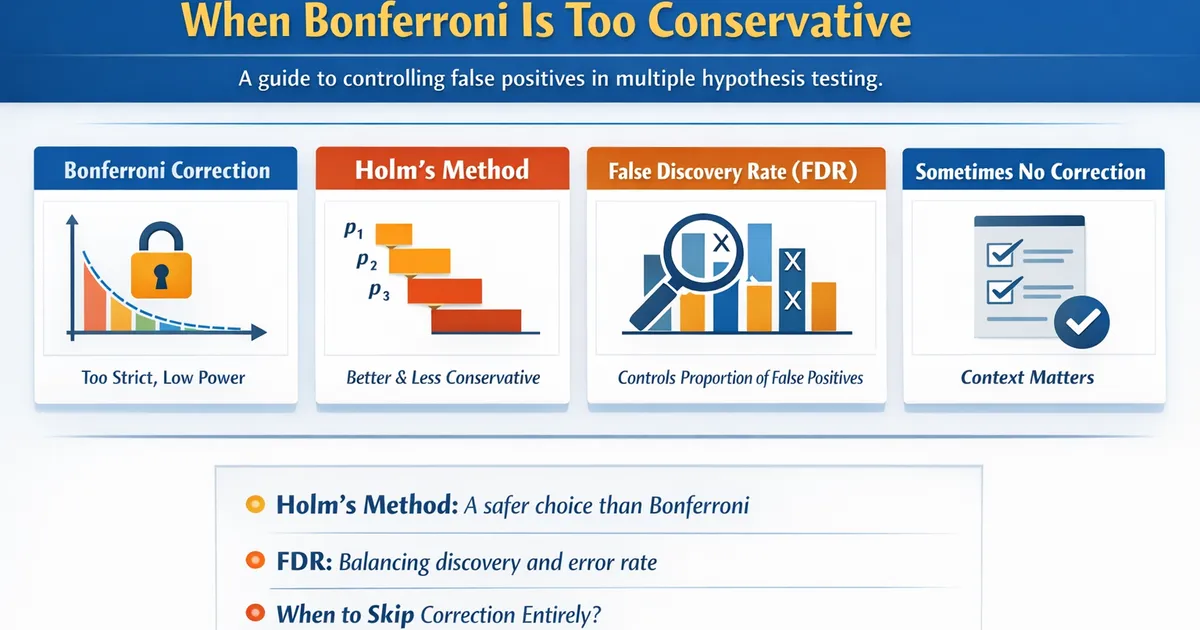
Multiple Comparisons: When Bonferroni Is Too Conservative
A practical guide to controlling false positives when testing multiple hypotheses. Learn when Bonferroni over-corrects and better alternatives like Holm, FDR, and when to skip correction entirely.
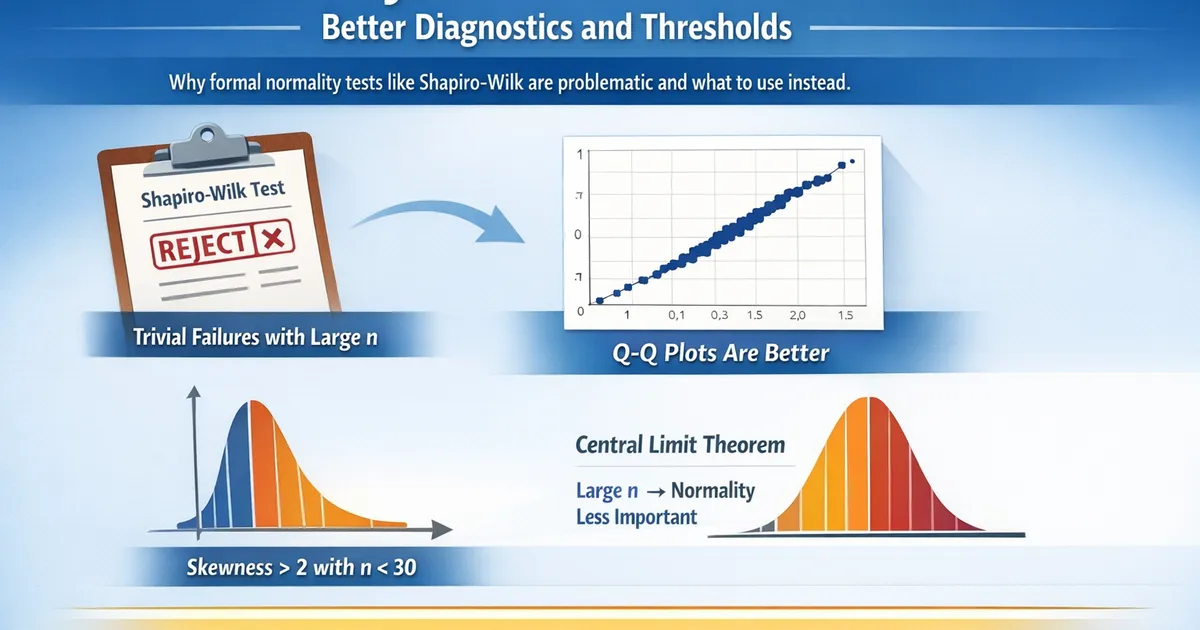
Normality Tests Are Overrated: Better Diagnostics and Thresholds
Why formal normality tests like Shapiro-Wilk are problematic and what to use instead. Learn practical thresholds for when non-normality actually matters.
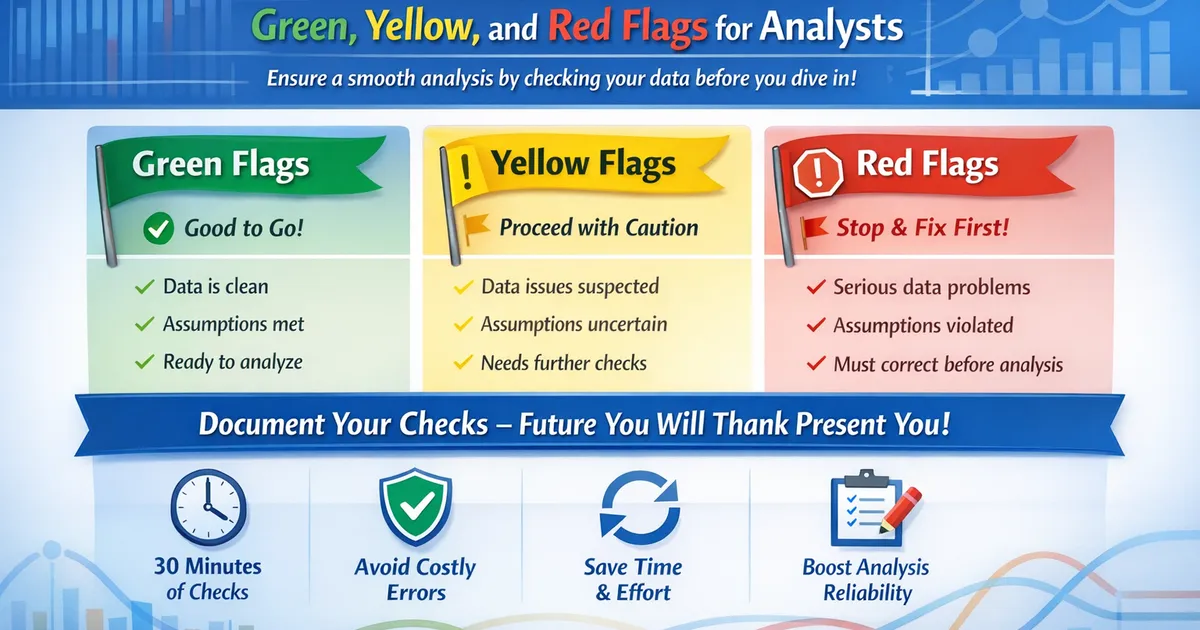
Pre-Analysis Checklist: Green, Yellow, and Red Flags for Analysts
A practical pre-flight checklist before running statistical analyses. Covers data quality, assumption checks, and common pitfalls that can derail your analysis.