StatsTest Blog
Experimental design, data analysis, and statistical tooling for modern teams. No hype, just the math.
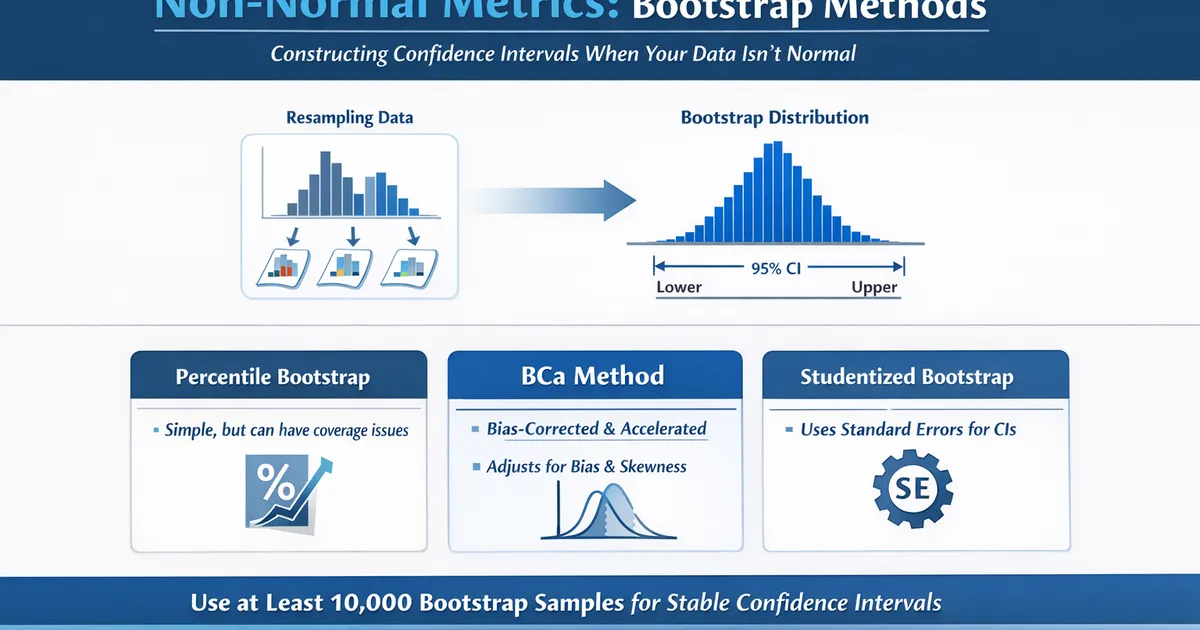
Confidence Intervals for Non-Normal Metrics: Bootstrap Methods
How to construct confidence intervals when your data isn't normal. Covers percentile, BCa, and studentized bootstrap methods with practical guidance on when each works best.
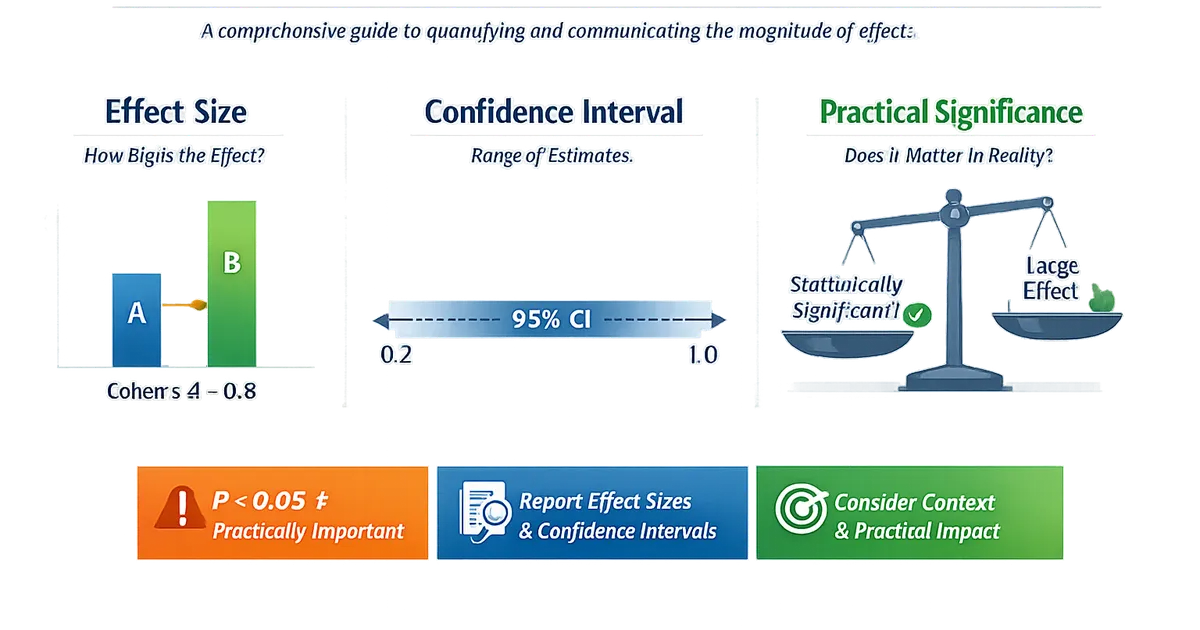
Effect Sizes, Confidence Intervals, and Practical Significance
A comprehensive guide to quantifying and communicating the magnitude of effects. Covers standardized and raw effect sizes, confidence intervals, and when statistical significance doesn't mean practical importance.
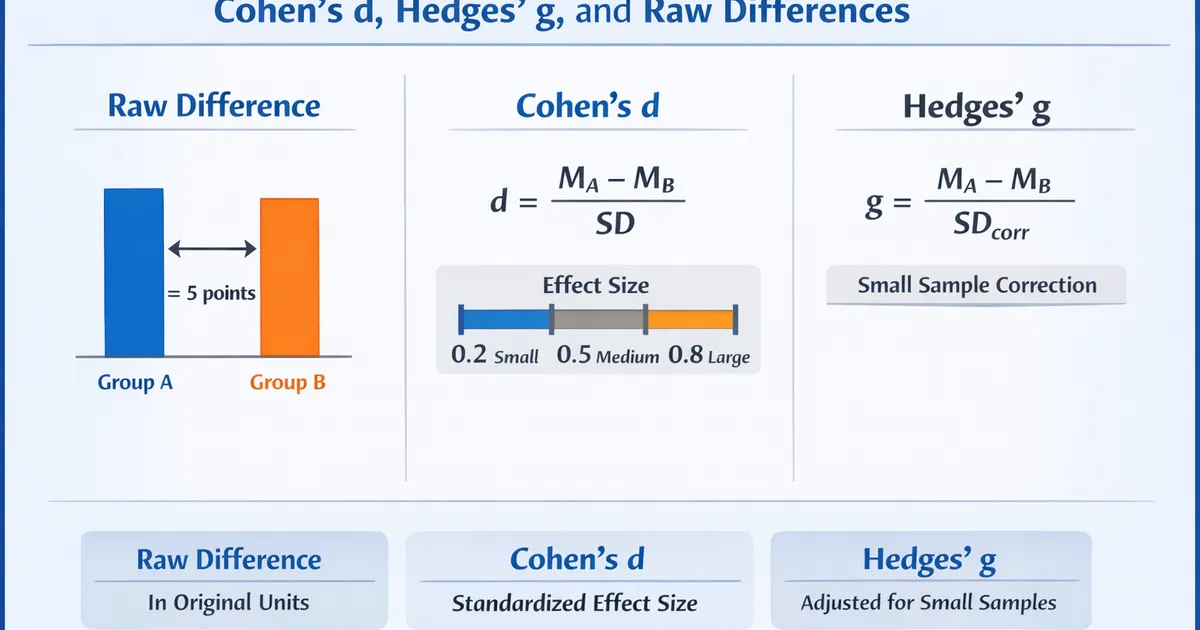
Effect Sizes for Mean Differences: Cohen's d, Hedges' g, and Raw Differences
A practical guide to effect sizes for comparing means. Learn when to use standardized vs. raw effect sizes, how to calculate and interpret them, and how to report them properly.
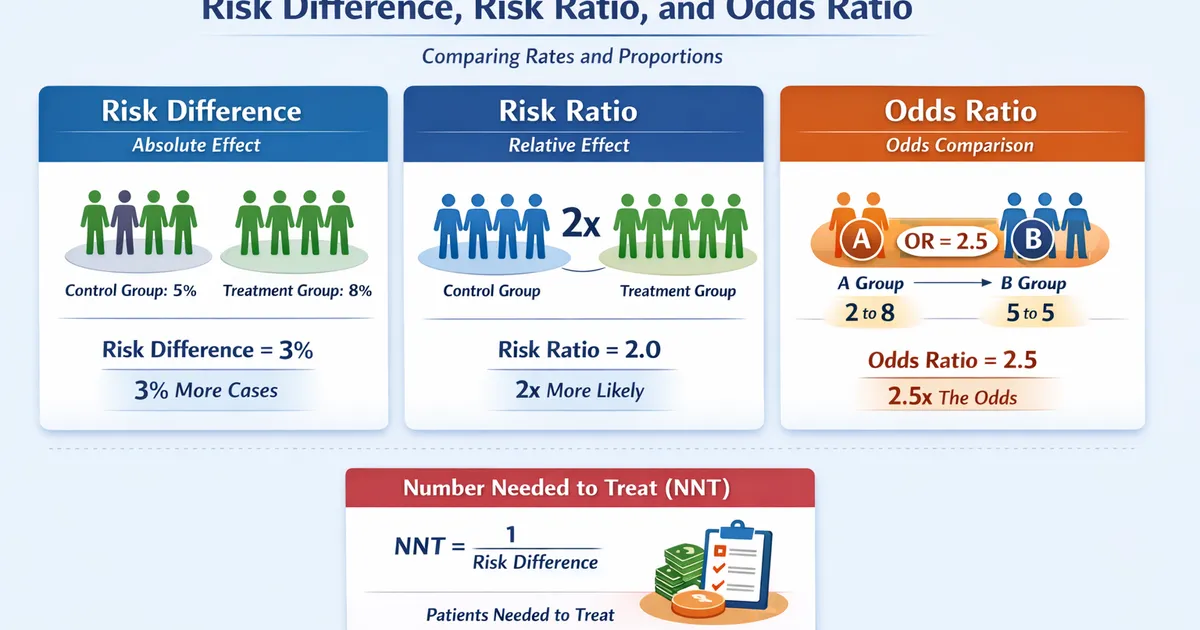
Effect Sizes for Proportions: Risk Difference, Risk Ratio, and Odds Ratio
A practical guide to effect sizes when comparing rates and proportions. Learn when to use risk difference vs. risk ratio vs. odds ratio, and how to interpret each correctly.
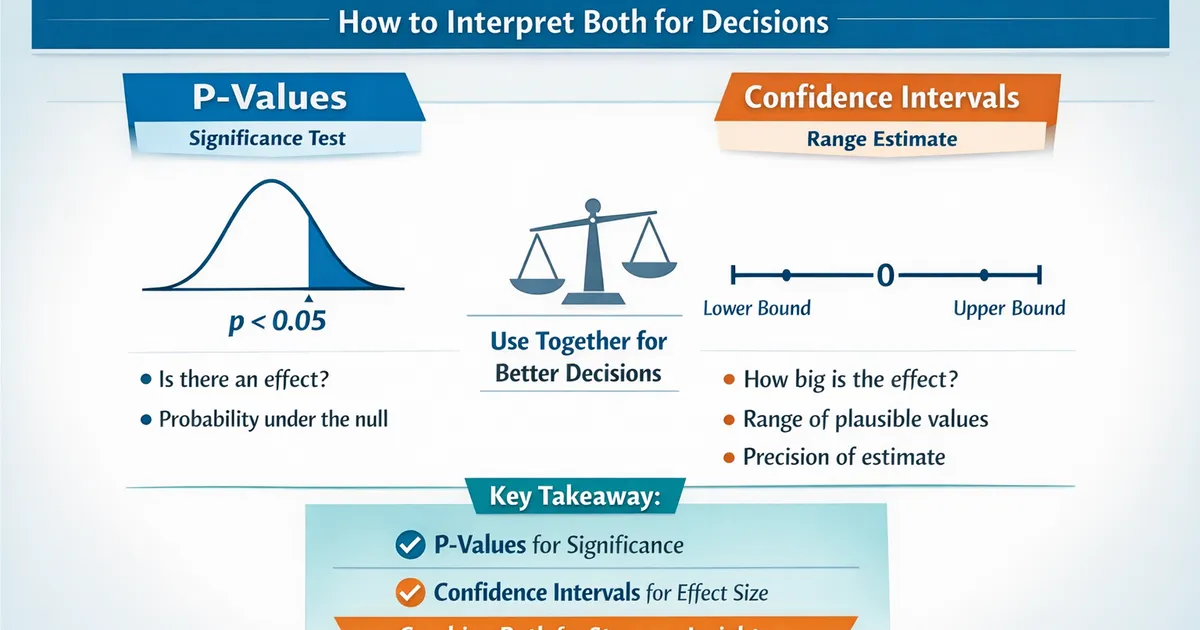
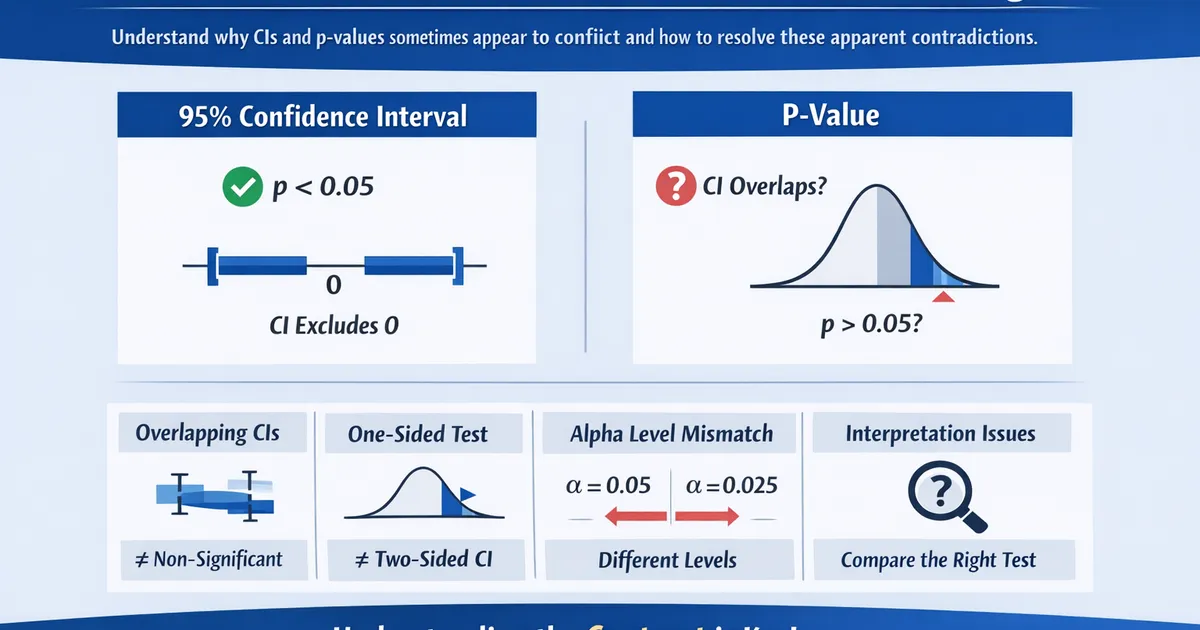
P-Values vs. Confidence Intervals: How to Interpret Both for Decisions
Understand the relationship between p-values and confidence intervals, when they agree, when they seem to disagree, and how to use them together for better decisions.
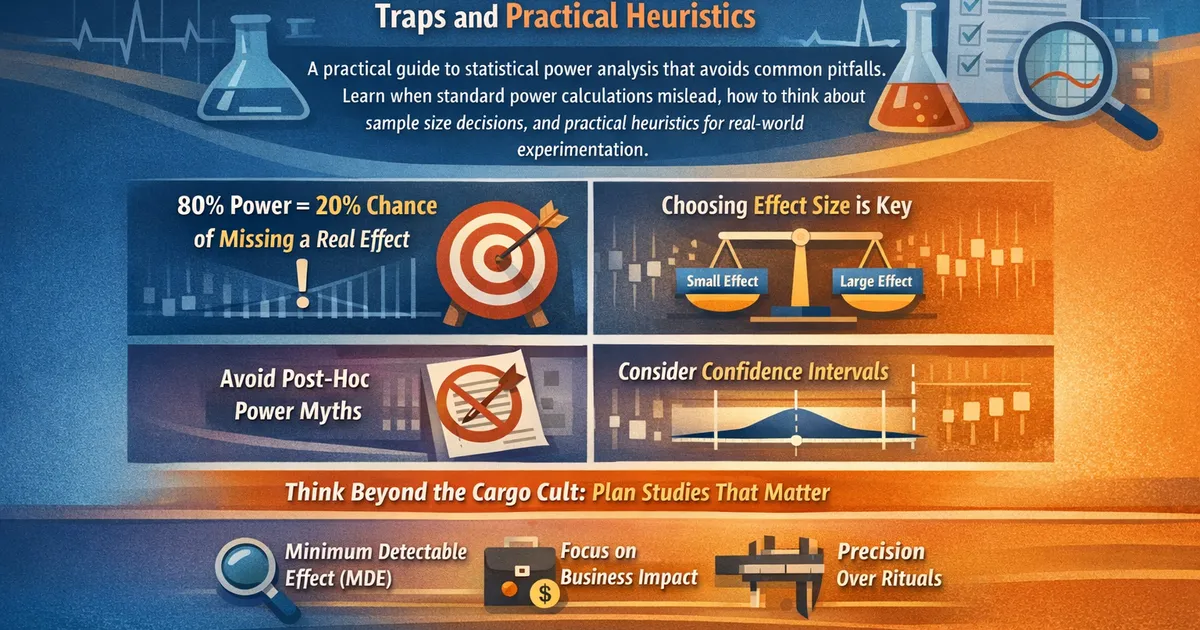
Power Analysis Without Cargo Culting: Traps and Practical Heuristics
A practical guide to statistical power analysis that avoids common pitfalls. Learn when standard power calculations mislead, how to think about sample size decisions, and practical heuristics for real-world experimentation.
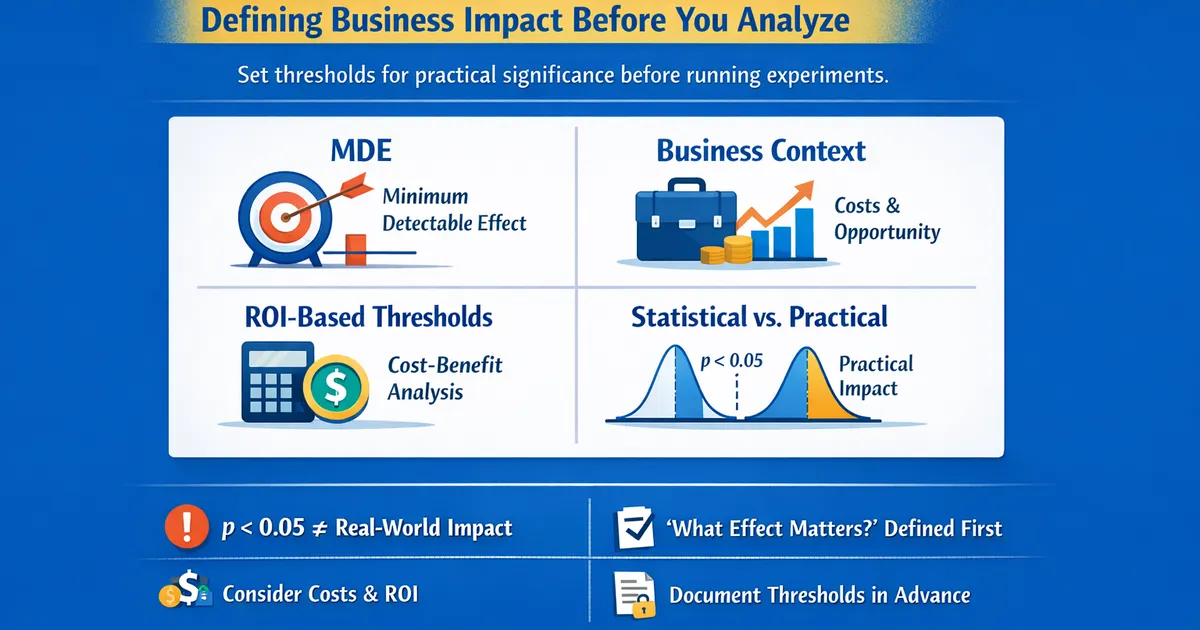
Practical Significance Thresholds: Defining Business Impact Before You Analyze
Learn how to set meaningful thresholds for practical significance before running experiments. Covers MDE, business context, ROI-based thresholds, and the difference between statistical and practical significance.
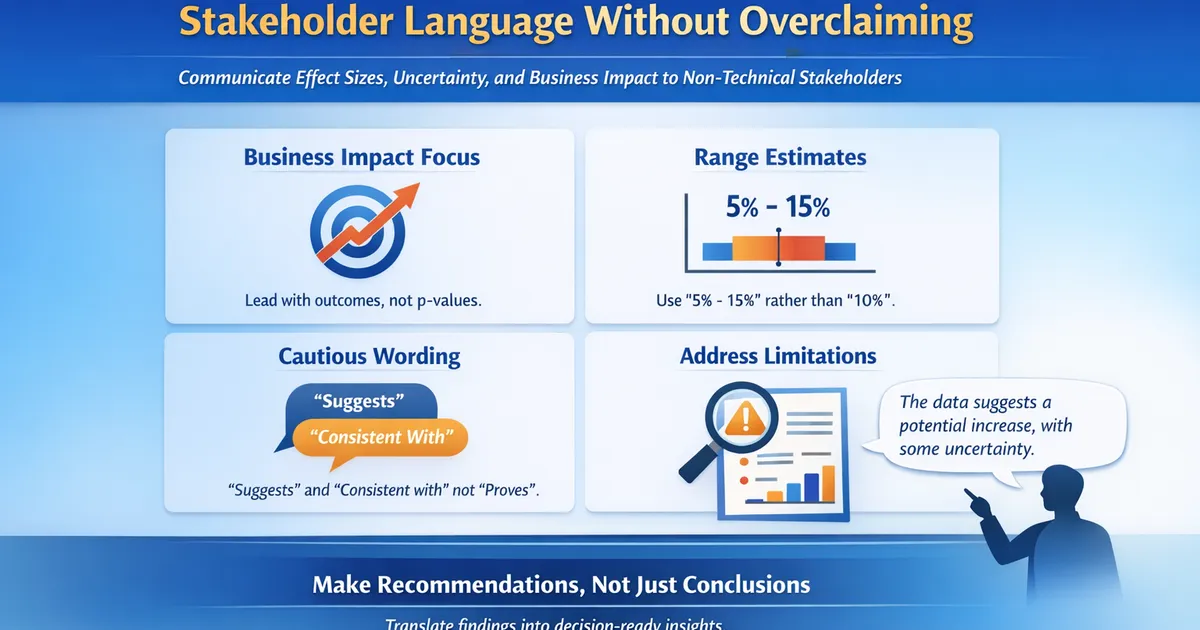
Reporting Templates: Stakeholder Language Without Overclaiming
Ready-to-use templates for presenting statistical results to non-technical stakeholders. Learn to communicate effect sizes, uncertainty, and practical significance without oversimplifying or overclaiming.