StatsTest Blog
Experimental design, data analysis, and statistical tooling for modern teams. No hype, just the math.
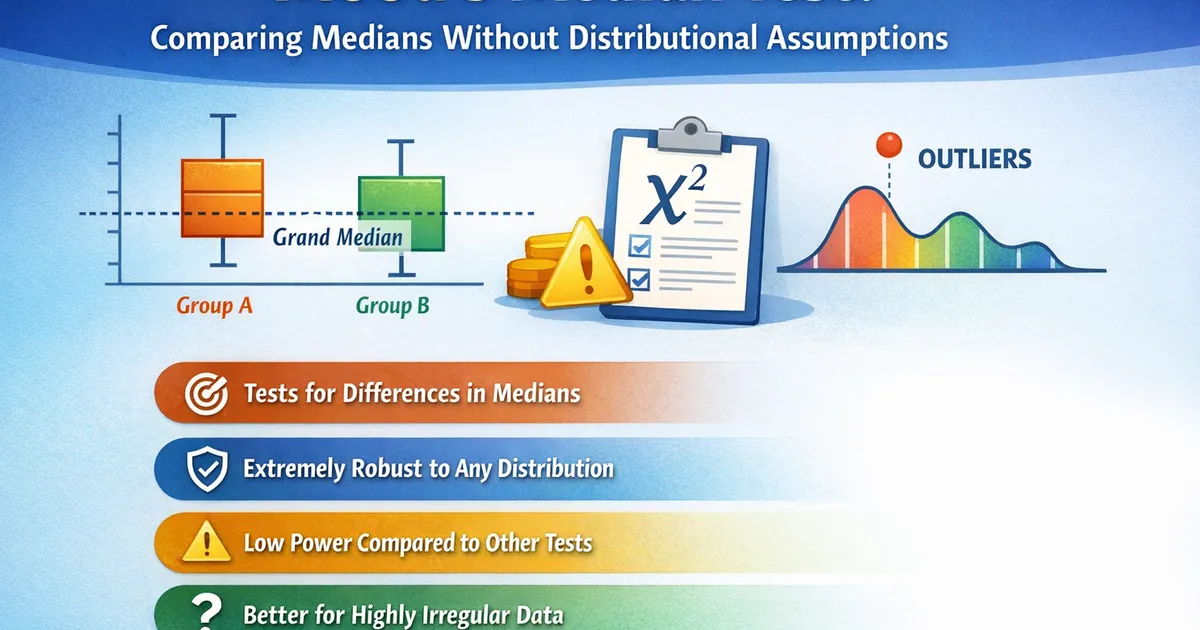
Mood's Median Test: Comparing Medians Without Distributional Assumptions
Mood's median test compares medians across two or more groups with minimal assumptions. Learn when it beats Mann-Whitney, its limitations, and better alternatives.
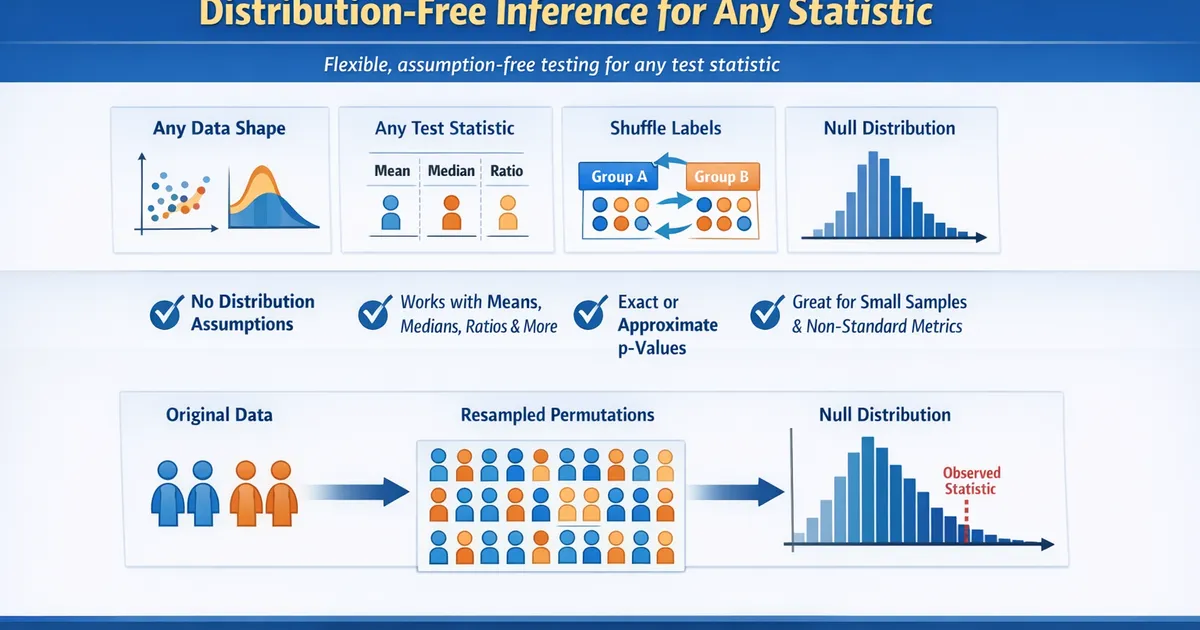
Permutation Tests: Distribution-Free Inference for Any Statistic
Permutation tests make no distributional assumptions and work with any test statistic. Learn when they beat parametric tests, how they work, and practical implementation tips.
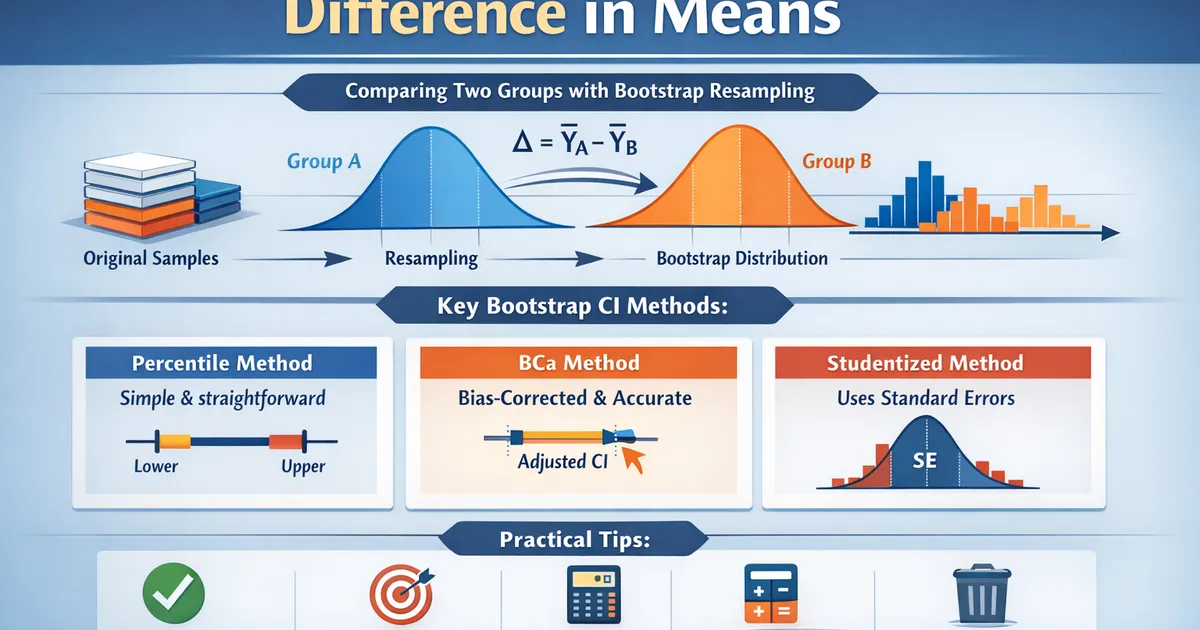
Bootstrap Confidence Intervals for Difference in Means
How to use bootstrap resampling to construct confidence intervals for comparing two groups. Covers percentile, BCa, and studentized methods with practical guidance.
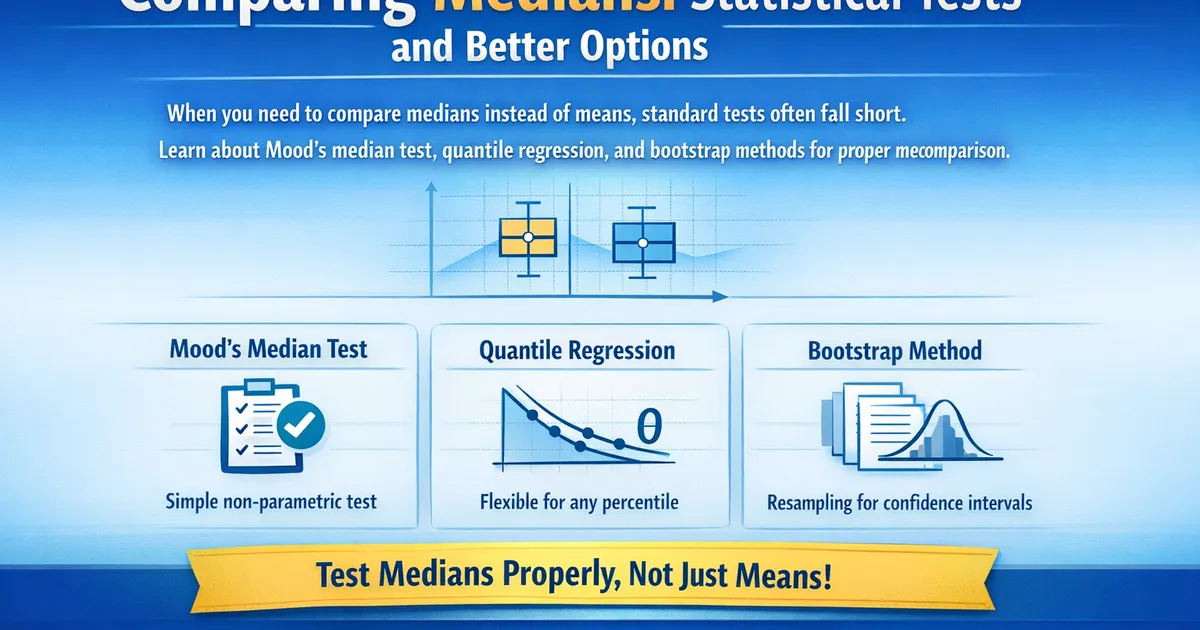
Comparing Medians: Statistical Tests and Better Options
When you need to compare medians instead of means, standard tests often fall short. Learn about Mood's median test, quantile regression, and bootstrap methods for proper median comparison.
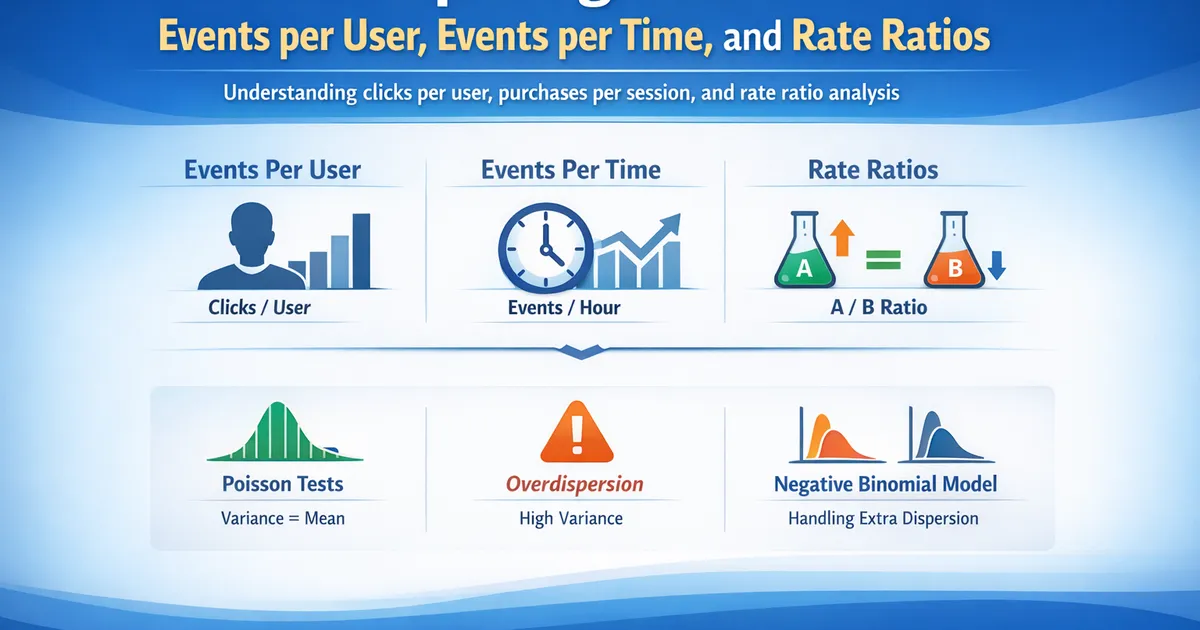
Comparing Rates: Events per User, Events per Time, and Rate Ratios
How to properly compare rates like clicks per user, purchases per session, or events per hour. Covers rate ratios, Poisson tests, and common pitfalls with ratio metrics.
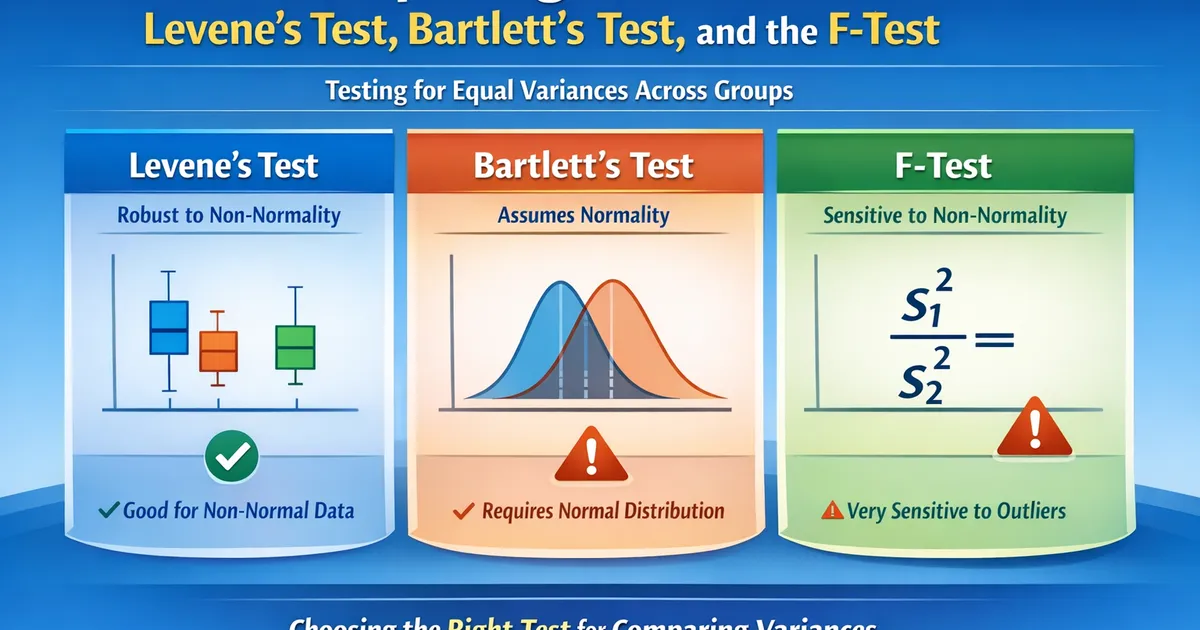
Comparing Variances: Levene's Test, Bartlett's Test, and the F-Test
When you need to test whether two or more groups have equal variances. Covers Levene's test, Bartlett's test, Brown-Forsythe, and when each is appropriate.
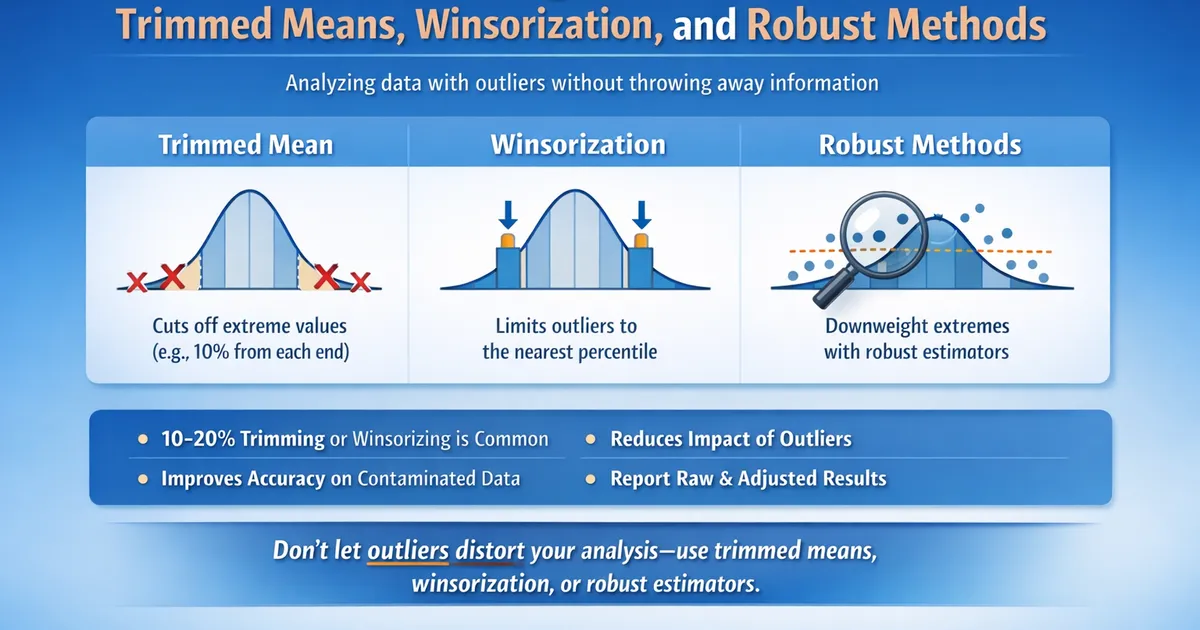
Handling Outliers: Trimmed Means, Winsorization, and Robust Methods
How to analyze data with outliers without throwing away information or letting extreme values dominate. Covers trimming, winsorization, robust estimators, and when each is appropriate.
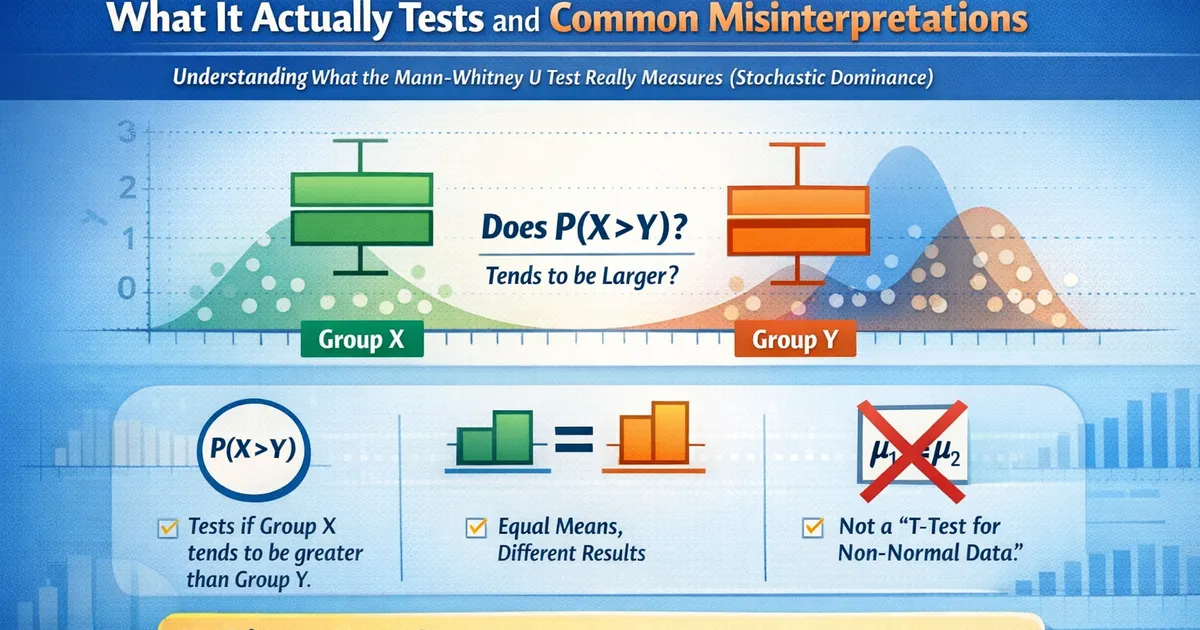
Mann-Whitney U Test: What It Actually Tests and Common Misinterpretations
The Mann-Whitney U test is widely misunderstood. Learn what it actually tests (stochastic dominance), when it's appropriate, and why it's not always a substitute for the t-test.
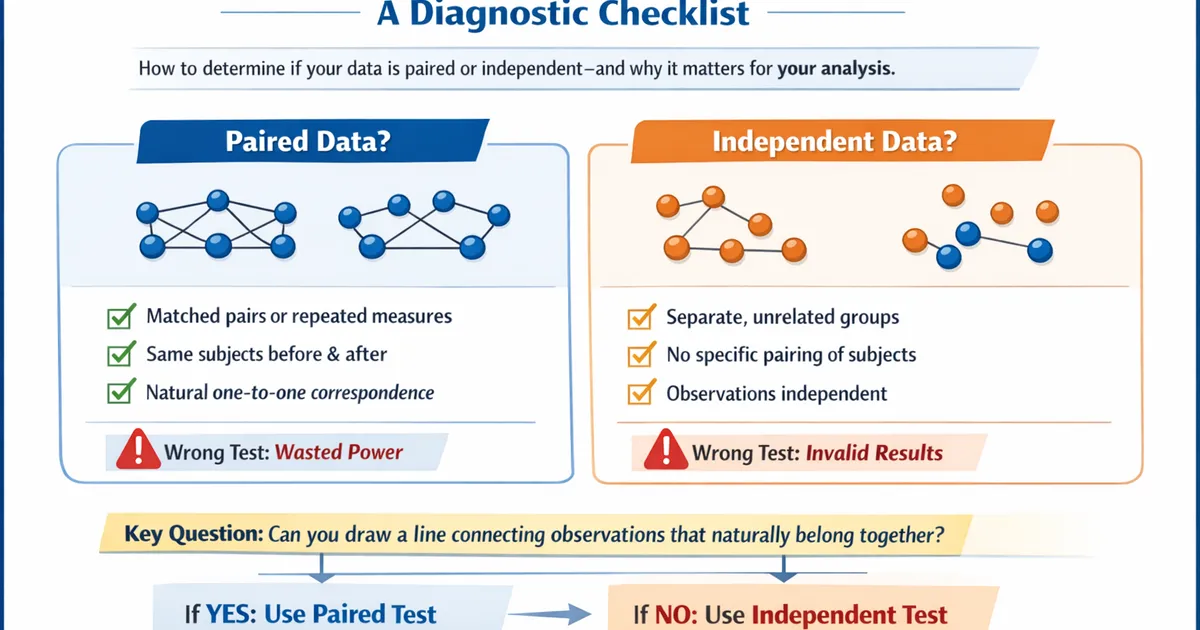
Paired vs. Independent Data: A Diagnostic Checklist
How to determine whether your data is paired or independent, and why getting this wrong can dramatically affect your statistical power and validity.
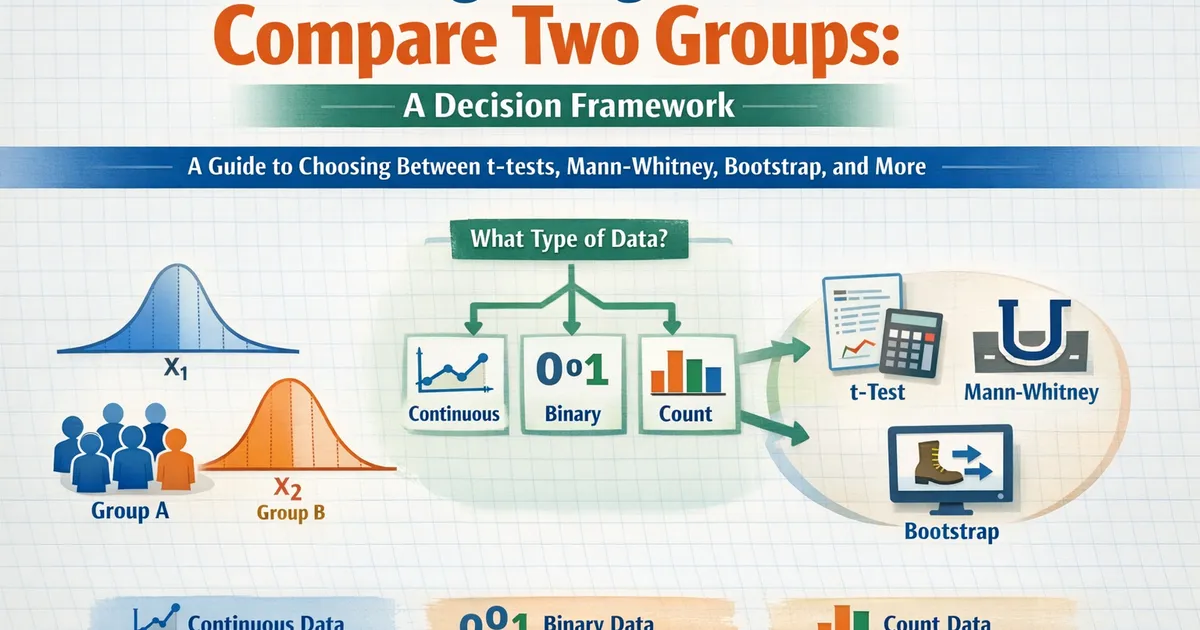
Picking the Right Test to Compare Two Groups: A Decision Framework
A comprehensive guide to choosing between t-tests, Mann-Whitney, bootstrap, and other methods when comparing two groups. Covers continuous, binary, and count data with practical decision trees.